
Learning Through Prototyping
August 14, 2026
By Liza Vartanova
Project: Agroecology
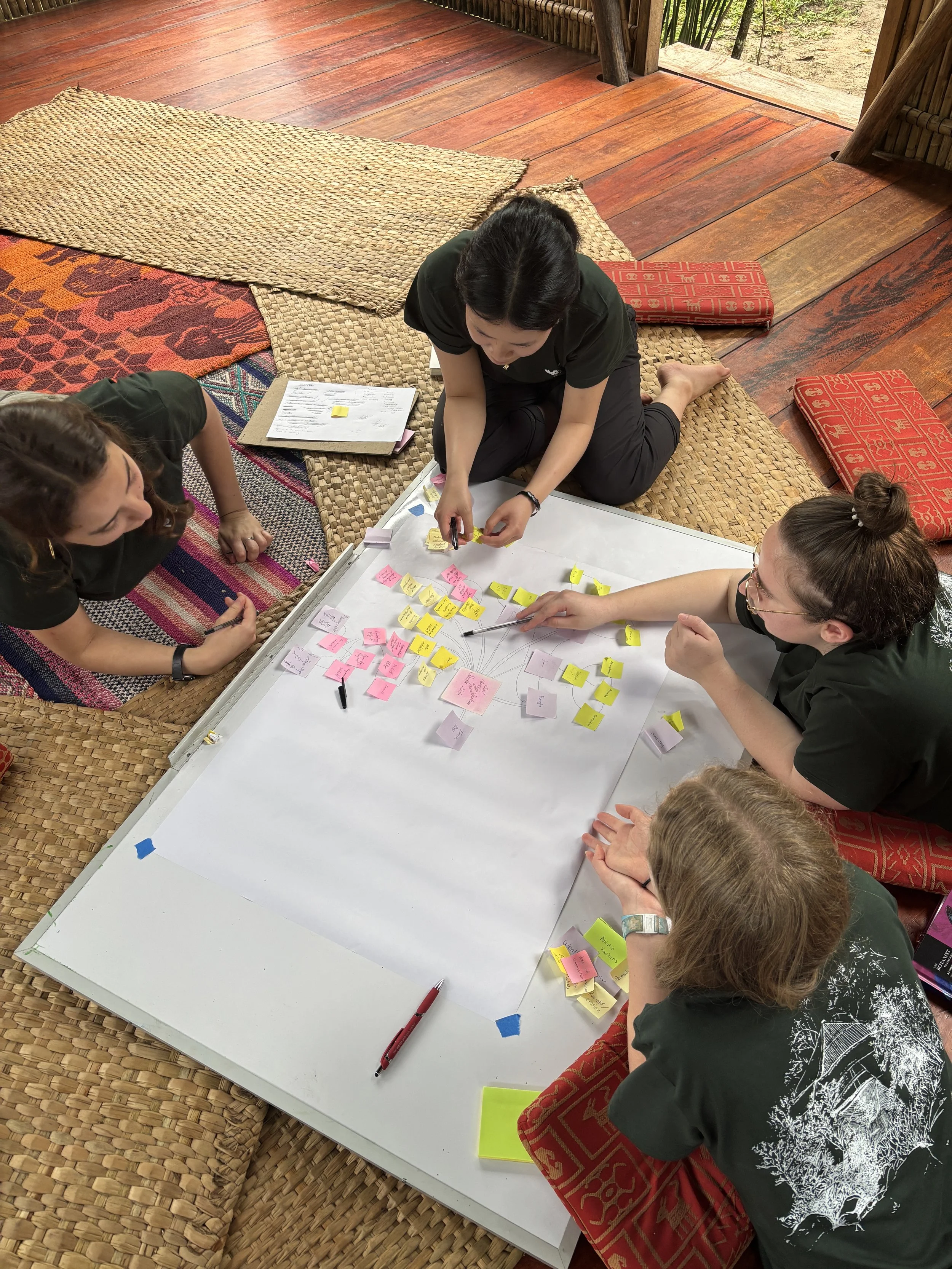
Hey! My name is Liza Vartanova and I’m going into my 3rd year of mechanical engineering at McGill University. This past summer was truly an experience. I came looking for a challenge and left with something much more valuable; new skills, new perspectives, new friends and a new understanding of what it means to innovate. Before starting the internship, the interns and I knew it was important to get context and understand the problems we were trying to help solve. Our first two weeks as the agroecology team consisted of watching, learning, and getting our hands dirty. We spent a lot of time with Marilu (the lead of soils and farming), learning about the composting process and seeing how to produce Yana Allpa, a native black soil. We collected food scraps and materials like biochar and kudzu (Neustanthus phaseoloides) leaves, helped make the mixture, and learned how to manage it throughout the process. At first, we turned the compost daily to aerate it, then gradually every few days until it was ready to sift. From start to finish, the process took around five weeks. What stood out to us was how time-consuming and labour-intensive the process was.
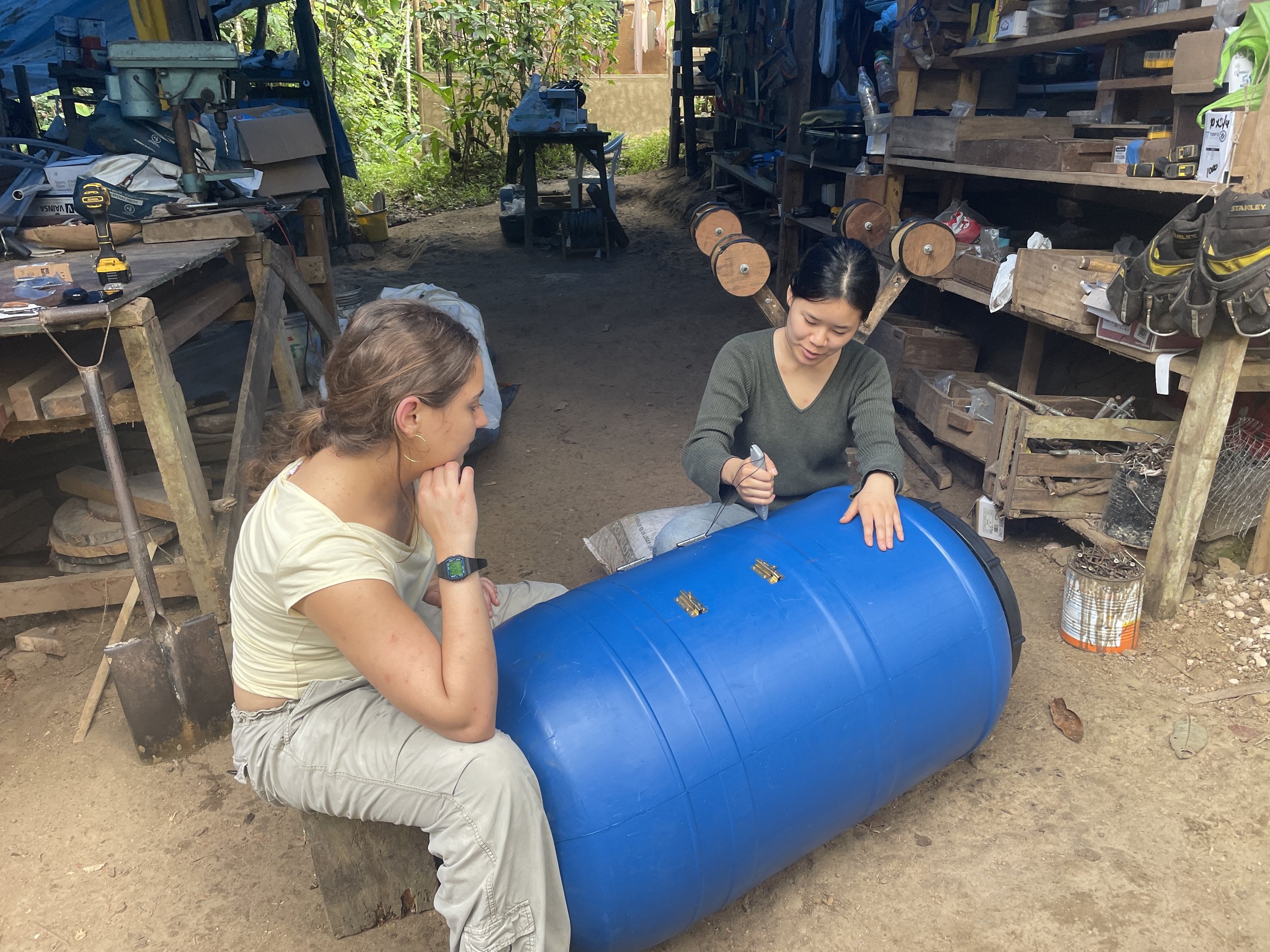
Turning the compost and then sifting it were both repetitive tasks that required a lot of physical effort. We immediately started thinking: How could we make this easier? Our minds went straight to a compost sifter and aerator. If we could create something that both aerates and sifts the compost, we could potentially eliminate two of the most labour-intensive parts of the process. It seemed like a simple enough solution. Of course, we did some research first. We looked at existing compost aerators and sifters to see what was already available. What we found was that most products were designed to do one job or the other. When we did find 2-in-1 systems, they were often much more complicated structures, usually made from aluminum and with mechanisms similar to products like the Ridan precompating system. They looked effective, but they weren't necessarily realistic for our context. But we had an idea, and so Mina and I decided to make our own. With the help of George, Siendo Naturaleza’s Director of Technical Operations, we designed what we thought would be a simple, practical, and easy-to-use compost sifter and aerator. We considered the materials available to us, how it would move, how someone would actually use it, and how we could make it without relying on complicated machinery. At the time, we were confident. Easy! I had spent time working in the woodshop. I knew how to use tools, measure, cut, and put things together from previous experiences. I had even followed an instruction manual to build projects before. So, naturally, I thought: how hard could it be to build a compost sifter and aerator? And so, Mina and I started building the Miza, a name we created by combining our two names. This was the beginning of our prototype.
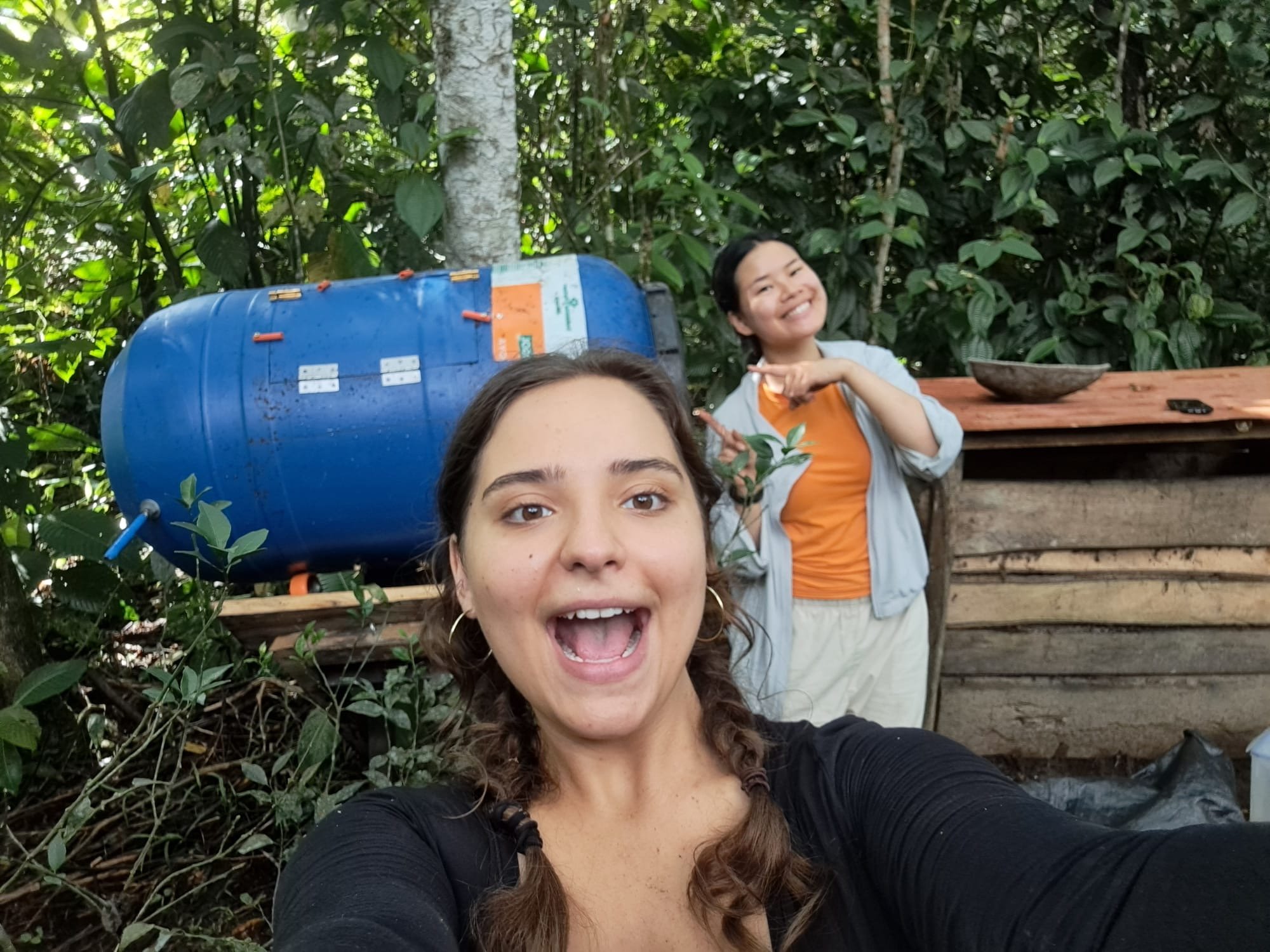
We started by building the base, figuring out how we wanted the structure to sit on wheels, and buying materials, including a large bin that we could modify for actually storing the compost. It looked like a real machine, and for a moment, it felt like we had actually done it. Then we tried to use it. Almost immediately, we started running into problems. The wheels were not working the way we wanted, the structure was difficult to move, and so on. Our first reaction was basically: easy, let's just modify it. Let's buy actual wheels. So we did. We adjusted the structure and tried to fix each problem as it came up. We kept telling ourselves that with one more modification, it would work.
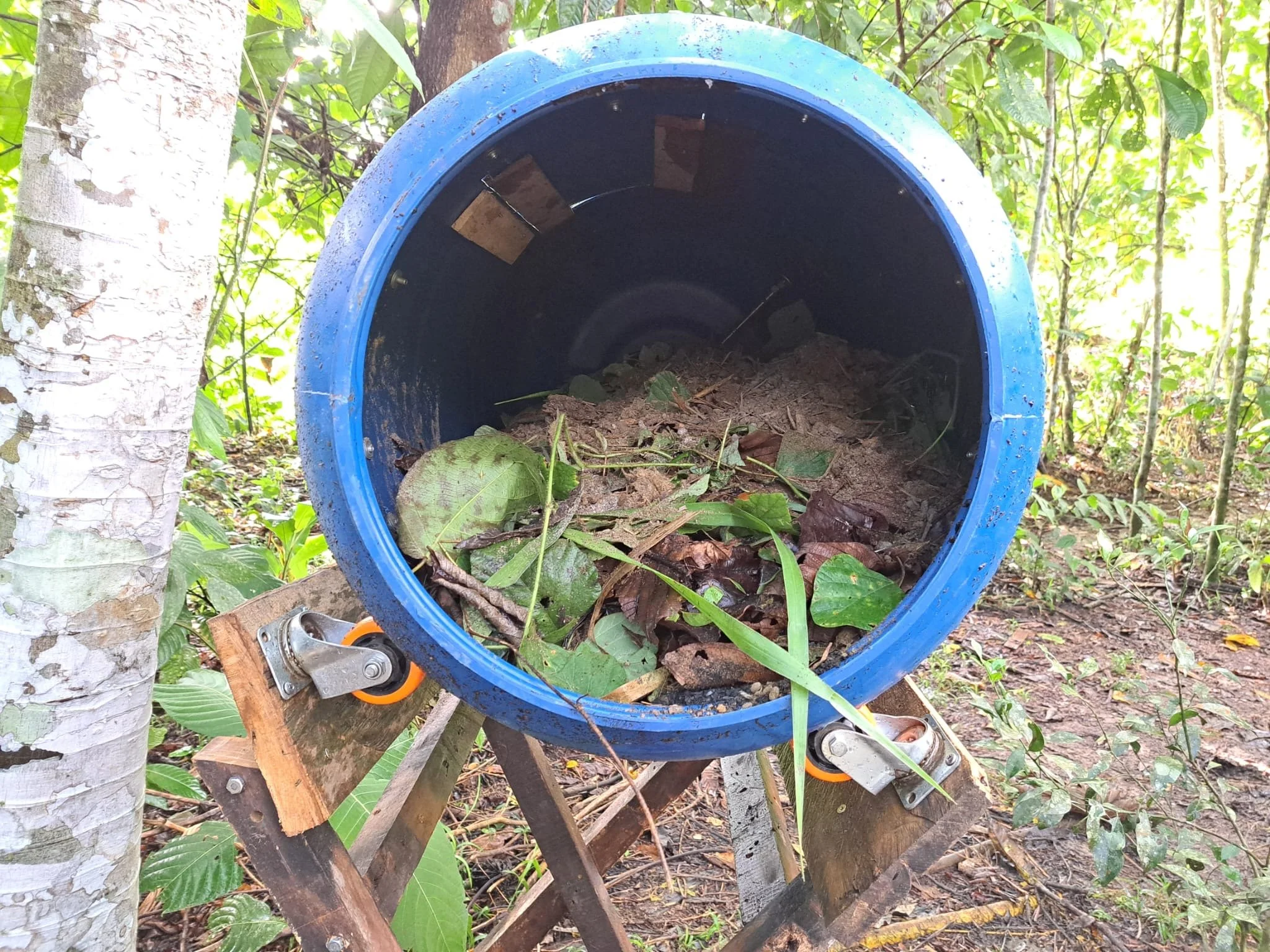
Then, it was time to show it in action to the other interns. And... it wasn't working. Leaves were getting caught in the net, the sifting hole was too small, the plastic bin was denting under the weight of the compost, and so on. There were mistakes we couldn't hide and problems we couldn't completely fix in time. Some changes would have required buying new parts and essentially rebuilding sections of the Miza, which wasn't realistic anymore. We had to work with what we had and make the best modifications we could.
Honestly, it was frustrating. We spent so much time building the Miza, and it was not performing as we had imagined. It was upsetting to realize that some of our decisions earlier in the process had made the prototype harder to change later. We had been so confident when we first started that it would be easy, and now we were struggling even to get one part of the machine to work properly. But this was also where we started to understand what prototyping actually meant. Instead of continuing to force every feature into one machine, we decided to isolate the designs. We asked ourselves: What if we focused on getting just one part of the concept to work?
We ultimately decided to focus on the sifting function and build a trommel, and I took this part of the project on myself. It was a step away from our original 2-in-1 Miza, but it gave us a chance to start testing again, learning from our mistakes, and figuring out what could actually work. To be resourceful, I decided to use what we already had instead of starting completely from scratch. I reused our pre-built base, the net we had already bought, and found some cheap bicycle wheel rims for around 4 soles each (about $1 USD). My goal was to see if I could turn these materials into a simple trommel that actually worked.
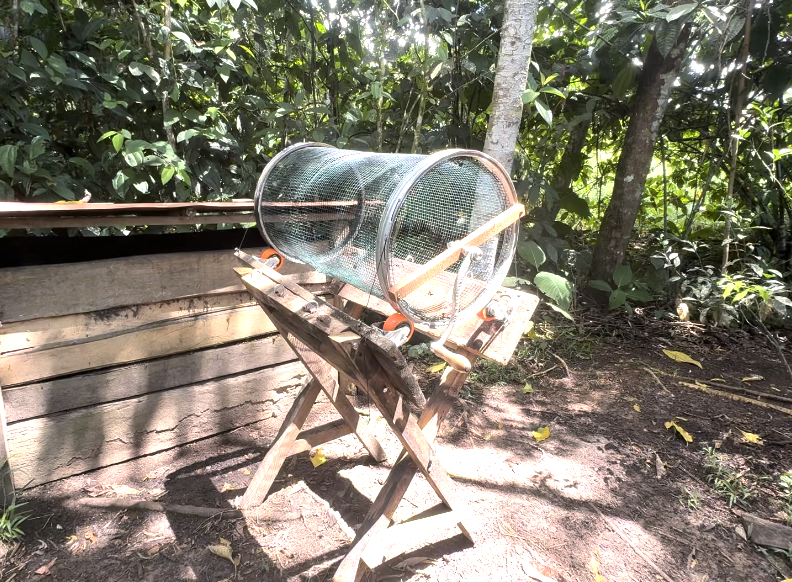
It ended up being about a week-long process. I had originally planned to make the trommel drill-powered because I thought that would make it more efficient. But as I started building, and after talking with Persi, an amazing member of the Siendo Naturaleza team, I realized that sometimes the simplest solution is the best one. We decided that a handle we had lying around in the workshop would be more practical. And surprisingly, it worked! It sifted compost easily and smoothly. It wasn’t perfect, but it was functional, and more importantly, it made the process easier. It showed Mina and me that we didn’t need an elaborate or expensive machine to solve the problem. While there is still room to improve the design, I left the team with a functional prototype and ideas for future improvements, such as making the height adjustable or creating a better catcher for larger chunks.
I left with the understanding that you have to be willing to push beyond your original idea. The Miza didn’t end up being what we initially imagined, and that’s okay. In fact, that was part of the prototyping process. Sometimes the best way to find the right solution is to build the wrong one first. We completed the goal we set out to accomplish, but I left with a better understanding of how to innovate, accept failure, and keep trying new ideas. The Miza taught me that innovation isn’t a straight line. It’s a process of ideating, prototyping, learning and trying again. I’m extremely grateful for the opportunity to have been on the land, learn from it and have it remind me that the systems we design are part of something much bigger than ourselves.
- Lots of love and Inca Kolas
Liza Vartanova
Agroecology Team, RCI 2026