
August 14, 2026
By Chloe Banister & Quinny Boyle
Project: Agroecology
Less than 24 hours ago, we said our goodbyes to Sacha Isla. We sat by the river for the final time, shared a last hug with the team, and gave Pepa the cat a final pet. In just two months, we built a connection to the land and to the people that we know will last a lifetime. As we reflect on our experience, we hope to share just how rewarding and beautiful this adventure has been. Let's start at the beginning.
We started the summer with a broad goal in mind: improve the compost systems on the land. At Sacha Isla, organic waste plays an important role in the regeneration of the land’s soil. From vermicomposting to making Yana Allpa (black soil) to making fertilizer out of human waste, the existing composting systems were all designed with the intention to replenish the soil and to establish a system of circularity. After spending time listening and observing, we realized that our goal of improving and integrating these systems would prove to be a challenge, so we listened some more, observed, and questioned: Where were there gaps in the system? What did the system actually look like? Which aspects were most concerning?
As it turned out, the act of listening was most important. Yes, we asked questions to those directly involved with compost, like Marilu, and made sure to document every word, but we learned the most when we realized that listening and understanding also meant actively participating in the process firsthand. So, we accompanied Marilú every day as she added food scraps to the Yana Allpa bins and turned them. For the first few weeks, we tried our best to communicate in Spanish, though we weren’t very good at it. By the end of the summer, we found ourselves regularly joking, laughing, and dancing to cumbia (Marilu’s favourite music) as we filled and turned the compost bins.
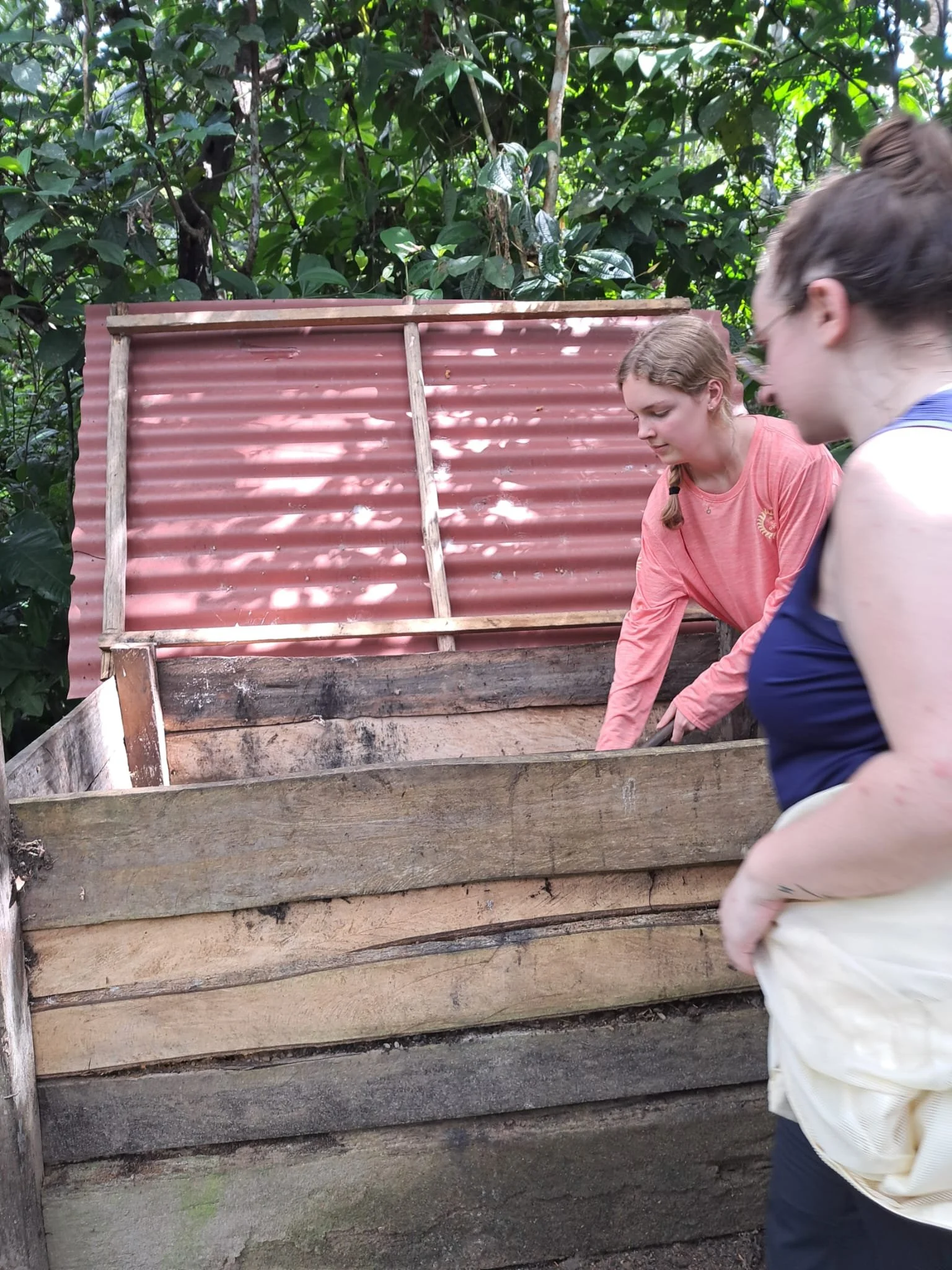
As we participated in this process, we developed two key insights:
As a cohort of seven interns, we generated a lot of food scraps, too many for the existing Yana Allpa system on the land to handle.
Food scraps start to smell. Bad. This was especially noticeable once they started piling up in a plastic cylinder, a last resort option as there was no other place for them to be stored.
We also spent time observing the vermicompost system with George, where he explained how the excess of organic waste had started to overload this system and negatively impact the worm’s ability to break down materials.
With these issues in mind, we began to look into pre-composting methods, and came across a practice called bokashi, which involves layering food scraps and bran inoculated with microorganisms. This layered mix is then left to ferment, and scraps get broken down before being added to a final composting pile, either in a bin system or even directly into the ground. For many reasons, this method stood out to us:
It emits a sweet, fermentation smell as opposed to a rotting food odor
It ‘pre-digests’ food scraps, so they are easily digested by worms
It allows for the stockpiling of excess food scraps without the risk of rotting
It generates a liquid that can be used as a potent fertilizer and effective drain cleaner
Thus, bokashi became the focus of our project. We spent the rest of our summer making different batches of bran and building storage containers. Although bokashi bran can be easily purchased, we were determined to make it ourselves using materials from the land. For the substrate, we used sawdust and rice husks, and we sourced our own microorganisms through the simple use of rice left in the forest to attract native micro-organisms. For the bokashi bins, we made drainage plates out of collected bottlecaps and metal mesh that was available in the workshop and materials bank. We did have to buy our own barrel for storage, however, on a field trip to Tarapoto. That was quite the adventure!
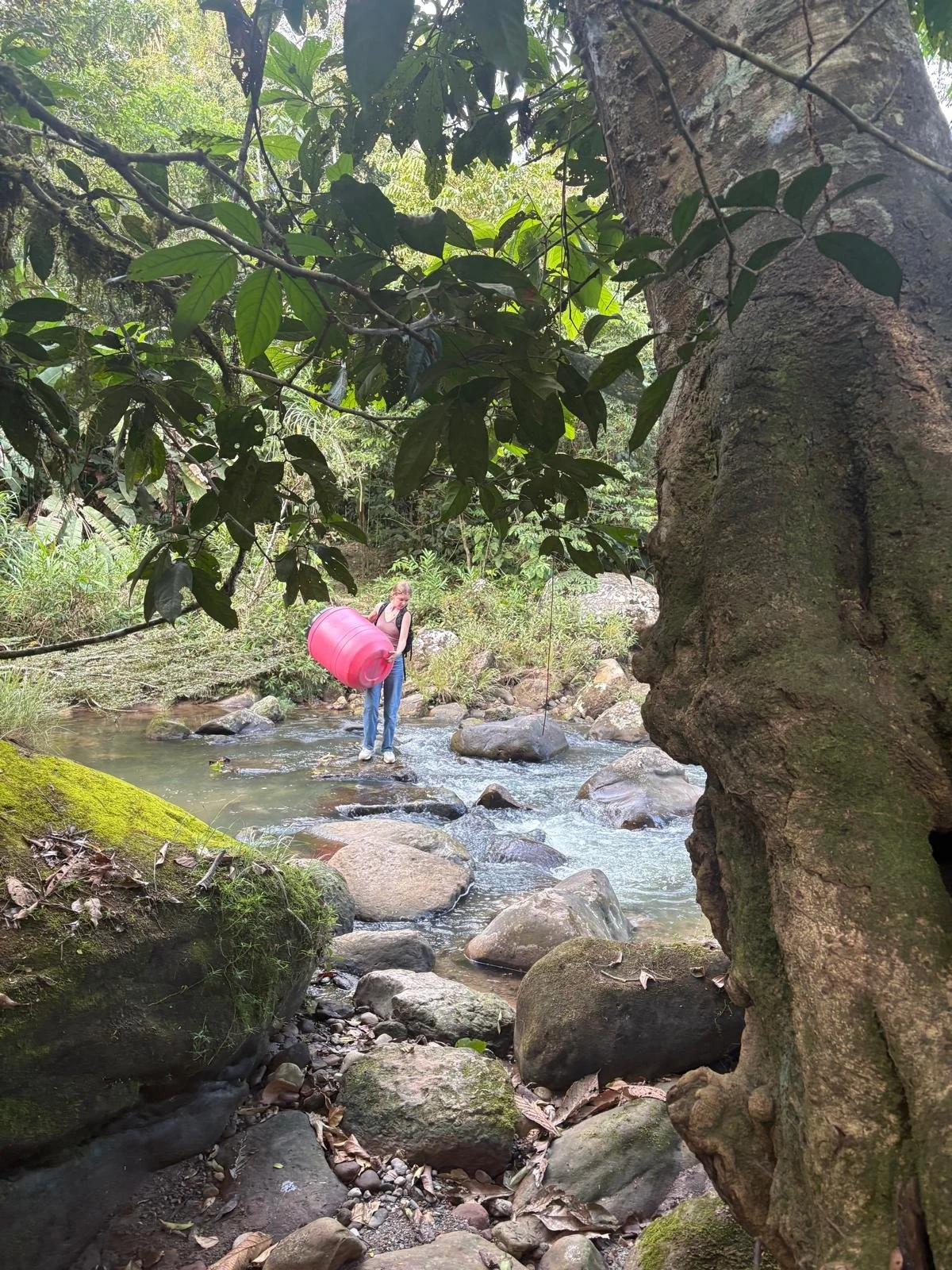
Our project was definitely a learning process. For example, when making the bran, we understood that it was important to pour the liquid mix slowly onto the substrate, after having made a mess. We also learned to dry the bran for more than a few hours if we wanted to avoid getting hit with the smell of sulfur after storing it. We learned to write “No Tocar” on the sugar we measured, after Carlos, one of the local team members, got hungry one afternoon.
By the end of the summer, we had developed a recipe for homemade bokashi bran, and during our final presentation to the local team we got to share our work and pass on our findings. We hosted a workshop where we demonstrated how to make the bran, use the bokashi system, and apply the resulting fermented mixture. Although our time on the land was coming to an end, we were able to leave the team with the kickstarting of a bokashi composting system and a guide for how to continue.
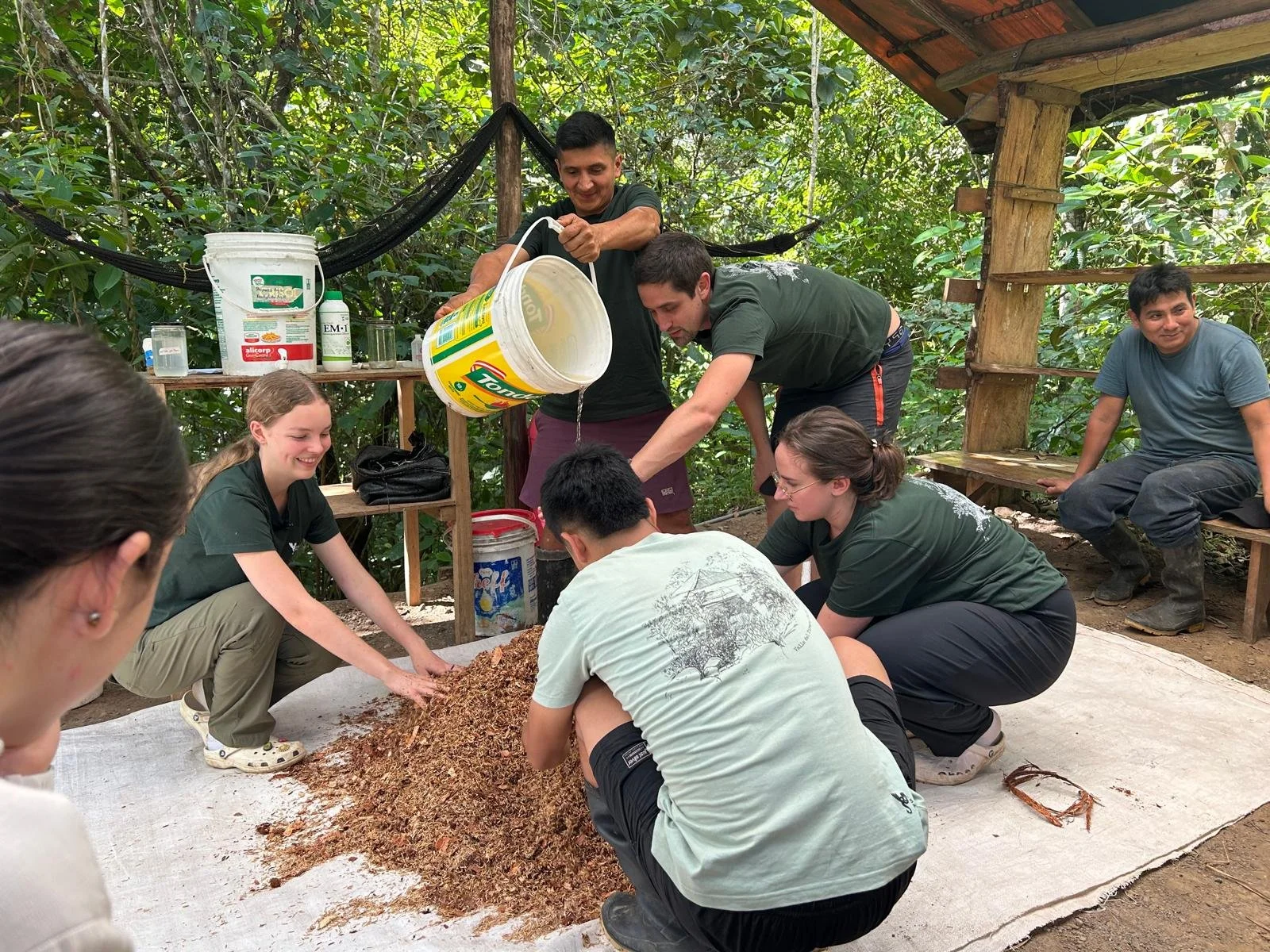
Working on this project at Siendo Naturaleza gave us the freedom to explore ideas, the space to prototype, the margin to learn from mistakes, and continuous support throughout our endeavour. We are so grateful to have spent the summer working on this project together, and for having learned so much from the land, the people, and each other.
Thank you to the land for welcoming us, to Siendo Naturaleza for providing us with this experience, and to all the readers for allowing us to share our adventure with you.
Ciao!
Quinnlyn Boyle & Chloe Banister
Agroecology Team, RCI 2026