
Biochar Filters: The Project I Never Worked With
August 14, 2026
By Mina Dao
Project: Biochar Filter
One week ago, I left Peru. And yet, I am still thinking about biochar.
In January, at an engineering conference, I learned about biochar. I was immediately intrigued. A resource that can be made of agricultural residues that can attract heavy metals, pollutants, microplastics like a magnet. Essentially, a carbon-negative solution for soil amendment, carbon sequestration, and water treatment. It seemed too good to be true.
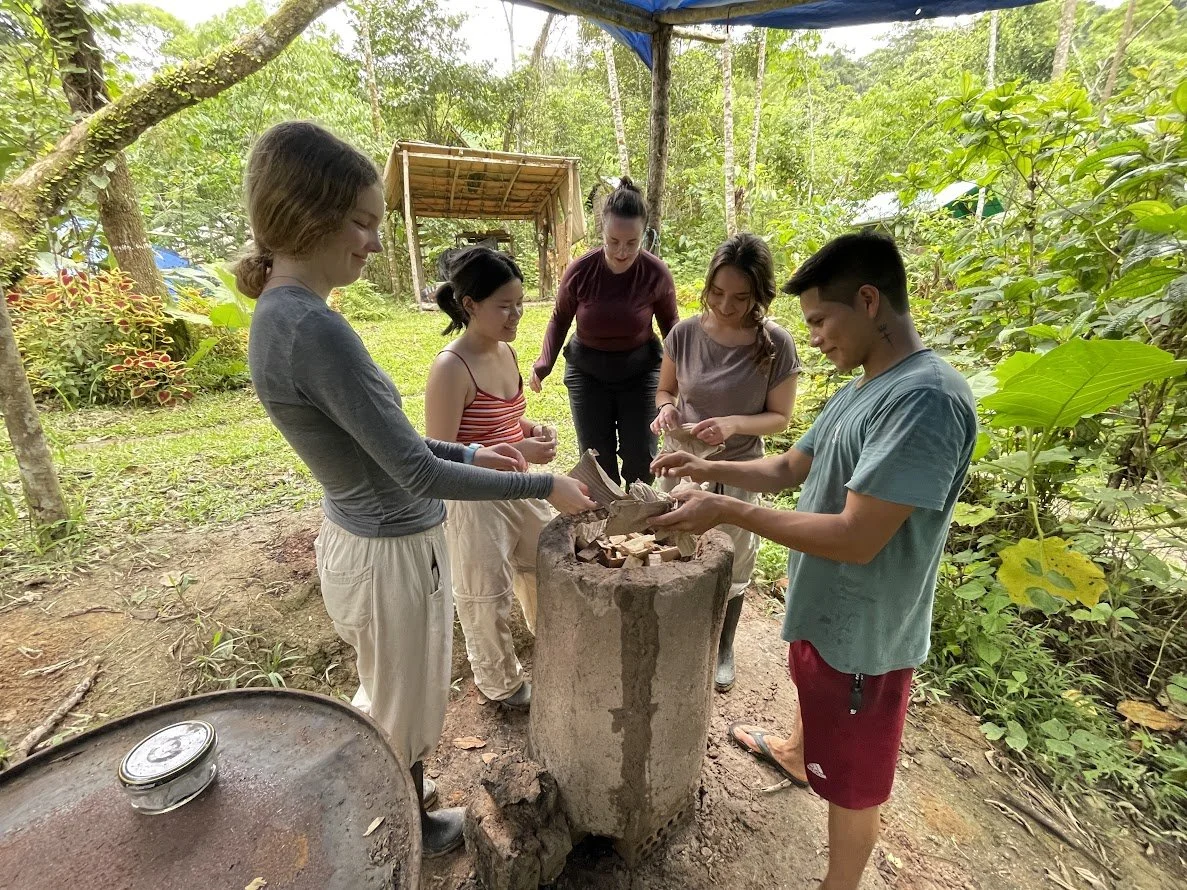
So, in our first week on the land, the agroecology team asked Neiser, a member of the Siendo Naturaleza team who is trained in producing biochar, to teach us how to perform a burn. We huddled around the kiln and watched the process start. We helped cut the feedstock into smaller pieces with an axe, cut kindling with a machete, and lit the kiln with a match. As we continued to watch the biochar burn, Neiser explained how biochar was used on the land: it is used in the Yana Allpa for aiding to grow gardens and in the humanure to mitigate smell. I remember wondering why something as useful and effective as biochar was not more widely and commonly used in the world outside of Sacha Isla. Biochar stayed in the back of my mind after this.
Fast forward post-break week. After returning back to Sacha Isla, after working on and completing the Miza compost aerator system for five weeks, I was ready to tackle and push for a new project. The thing that was on the back-burner of my mind all this time: biochar. The first thing I had to do for the project was bake bread.
Yes, really. George, the Director of Technical Operations, and I took to the kitchen to have our first unofficial technical meeting about the biochar project. We discussed the needs of Sacha Isla and how we might intervene to improve the current systems that exist, all while rolling out rosemary buns. We discussed whether it was more practical to work on improving the quantity or quality of biochar. We talked about more ways to further use biochar on the land. Now, at this point in our discussion, it is important to be reminded of where I was in terms of time. With two weeks left of the internship, there was still so much knowledge to be learned about biochar.
Water filtration is a tricky topic. There are many things to consider, like if we had what it takes to create this sort of water filter. Did we have high-quality biochar for water filtration? Do we have the materials and equipment already to create a filter? How would we lab-test water to see if it could become drinkable? It was important to set the project’s goal to a manageable scale for working by myself and manageable in the time that I had left in the internship. From this, George and I narrowed the scope. We decided that I would choose one process from the entire biochar production chain. Rather than pre-production, production, or post-production, I chose to work on a new application of biochar: a biochar kitchen wastewater filter. By the time we finished our discussion, the rolls were ready to be placed in the oven and my head was overflowing with ideas and innovations that I could take on with this sort of project.
The idea of using biochar for water filtration was something that intrigued me. Could biochar, the thing that we make on the land already, really be the ultimate low-cost, effective, and multipurpose alternative to giant water treatment plants?
But, before I could begin to get my hands dirty with biochar, I began doing research on biochar filters online. I especially learned a lot from George’s recommendation to watch the video “How to make your own water filter by Master Jon Jandai.”
I was finally ready to test out what I learned. I headed down to the river in my bathing suit to begin work. While swimming in the river (and working on my tan), I collected buckets of various sizes of rocks, stones, and sand to be brought back to the workshop with the help of Neiser.
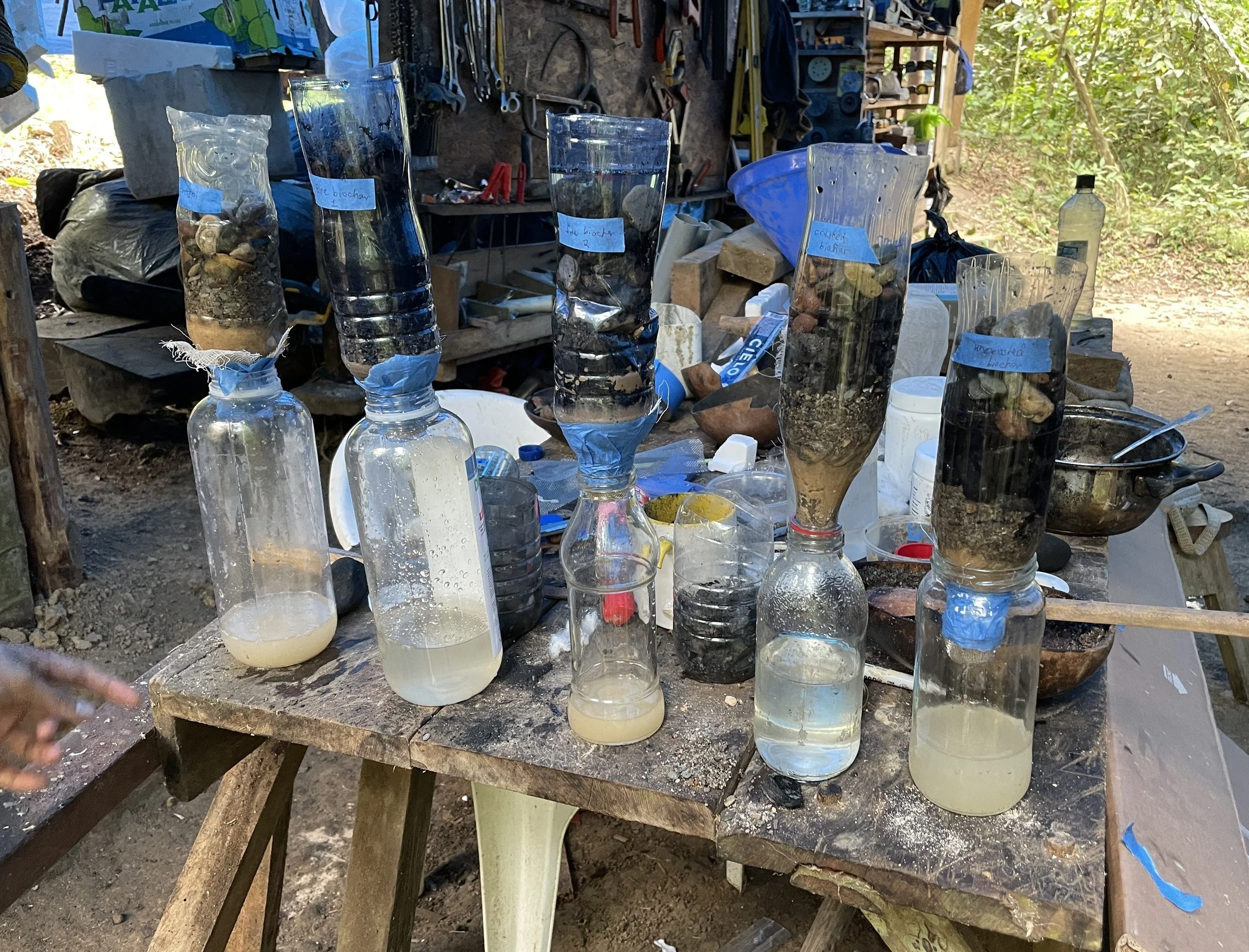
I began to create small scale filters from old plastic water bottles to trial different functions of biochar within a filter. Each time I did a trial, I would arrive at new findings that brought me to have new ideas to create even more trials. First, I tested the size of crushed biochar used. Then, I tested the placement of the biochar within the filter. Then, I changed the number of layers of biochar used within the filter. Finally, I tested the thickness of the biochar layers within the filter. I created 14 water filters in total.
With the help of water test strips from Lima and a couple of pigment tests using the Berkeley red dye test, I was able to determine that the most effective filter “recipe” created was a 3-layer crushed size of biochar, with a thick initial layer of fine biochar with rocks layered in increasing order of size in between layers of biochar.
When I found the recipe that worked best, I began to prototype a wastewater filter. I knew that I wanted to create a filter that was cheap and accessible, so I started my search for materials in the material’s bank, where “todo tiene su espacio” (everything has its place). This is where all old materials—from jars to cardboard boxes to water bottle caps—lie waiting to be repurposed and given a new life. From here, I sourced old funnels, buckets, mesh netting, and pipes.
I then applied the filter “recipe” to my prototype for the wastewater filter and implemented the filter behind the kitchen sink. Success! The filter could properly allow sink water to enter the system and leave clean water through an outlet pipe.
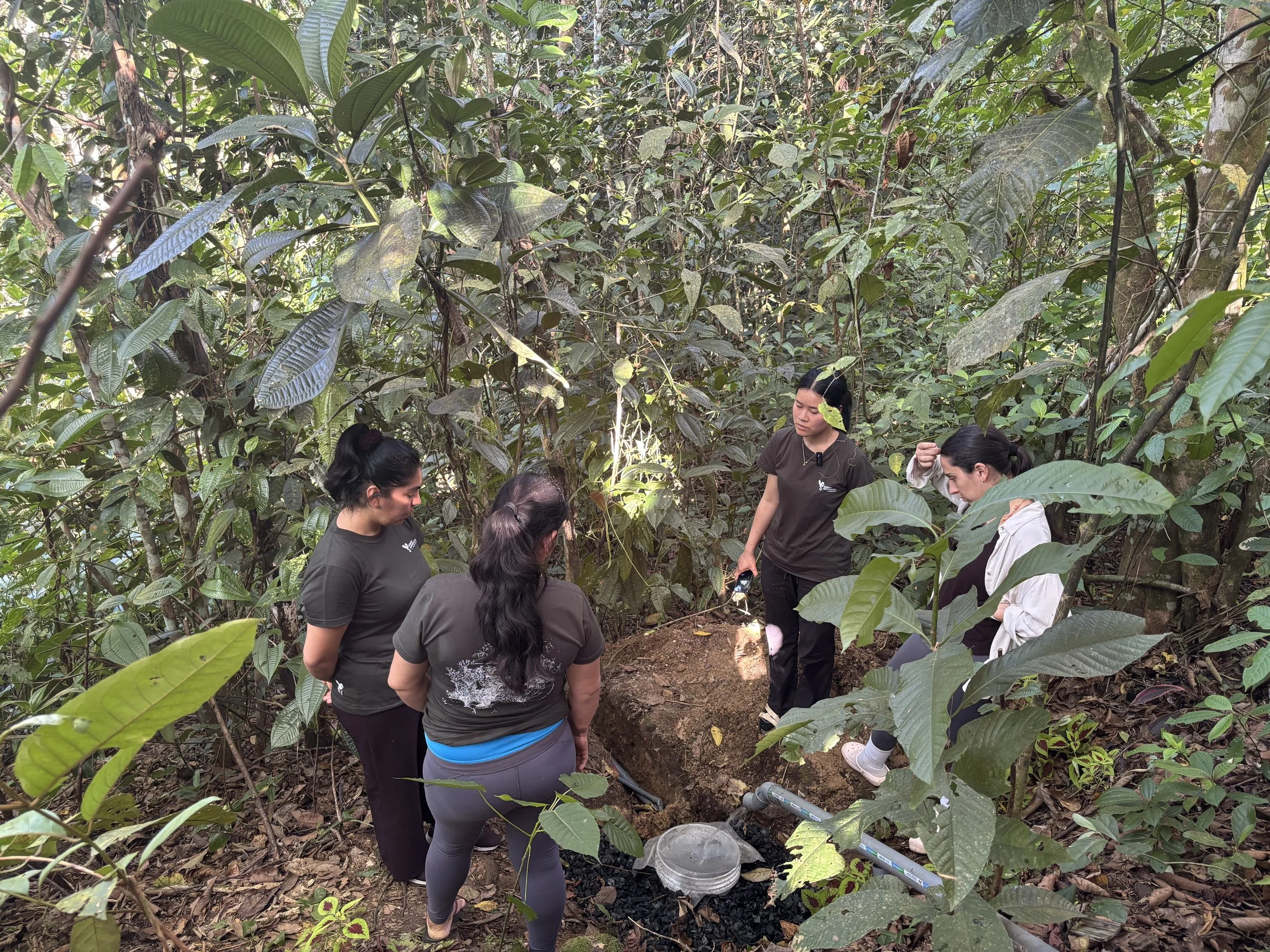
Now that I am back in Montreal having completed the intervention, I can’t help but feel excitement for the possibilities that this filter can bring. I can picture this being used and scaled up for filtering out water from showers, filtering urine from the urinary system, and even filtering clean drinking water. The possibilities are endless. More importantly, its potential impact is limitless.
Working with biochar never felt like “work”. The early mornings and late afternoons I spent in the workshop never felt like my end-goal was to meet a deadline. My extra hours spent in the workshop were because I discovered the unmatched feeling of exhilaration and satisfaction in creating something bigger than myself.
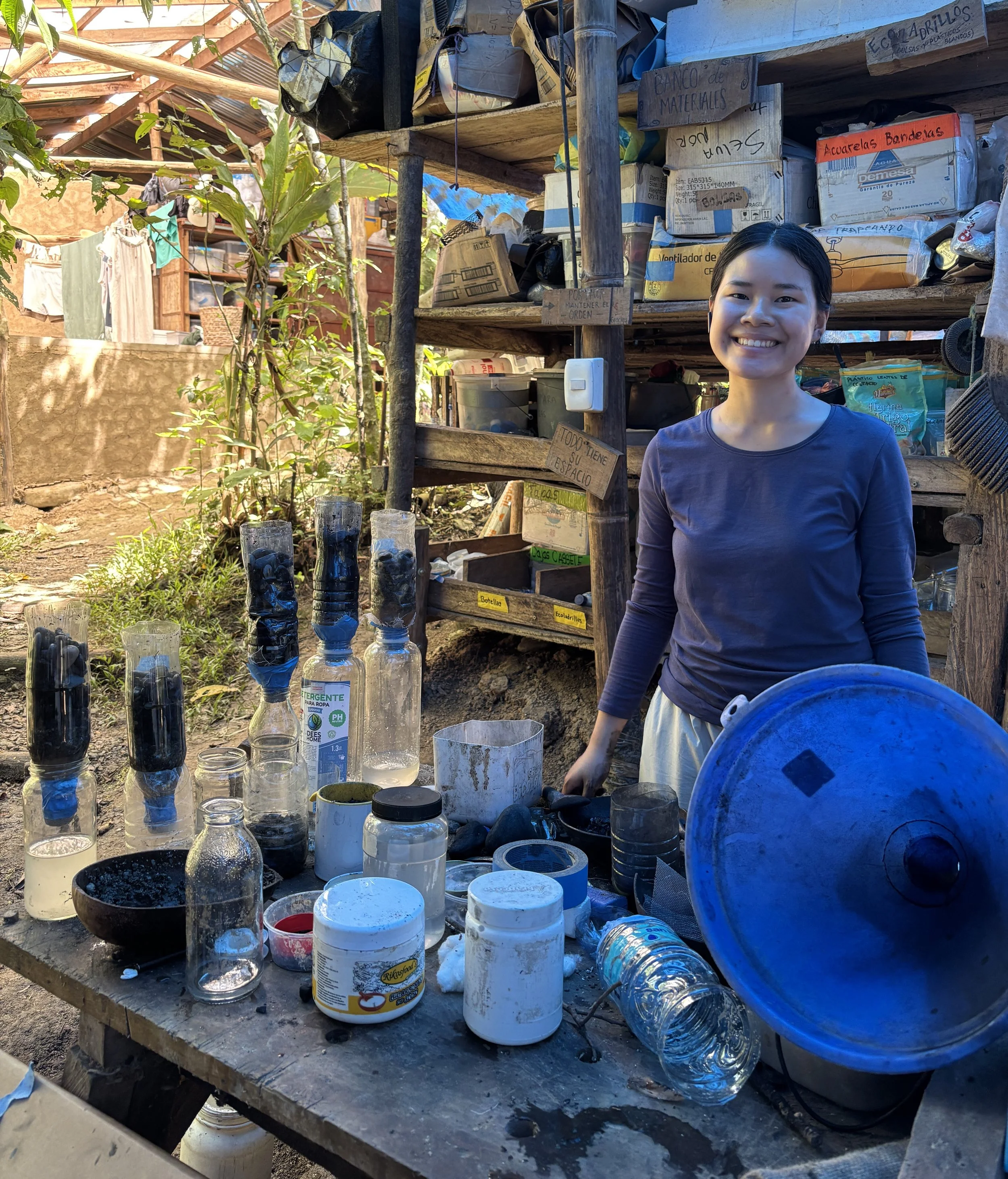
I owe this project so much for what it has taught me. Through this process, I have learned to trust myself. To advocate for my passion. To trust in the ideas that I bring. To have agency in the choices I make. These lessons learned, I’m sure, will be carried within me forever.
Yours most sincerely,
Mina Dao
Intern, Regeneration Challenges Internship
Bioresource Engineering at McGill University