
Sustainability As A Daily Practice, Not A Project
July 1, 2026
By Liza Vartanova, Mina Dao, Quinny Boyle and Chloe Banister
Project: Agroecology
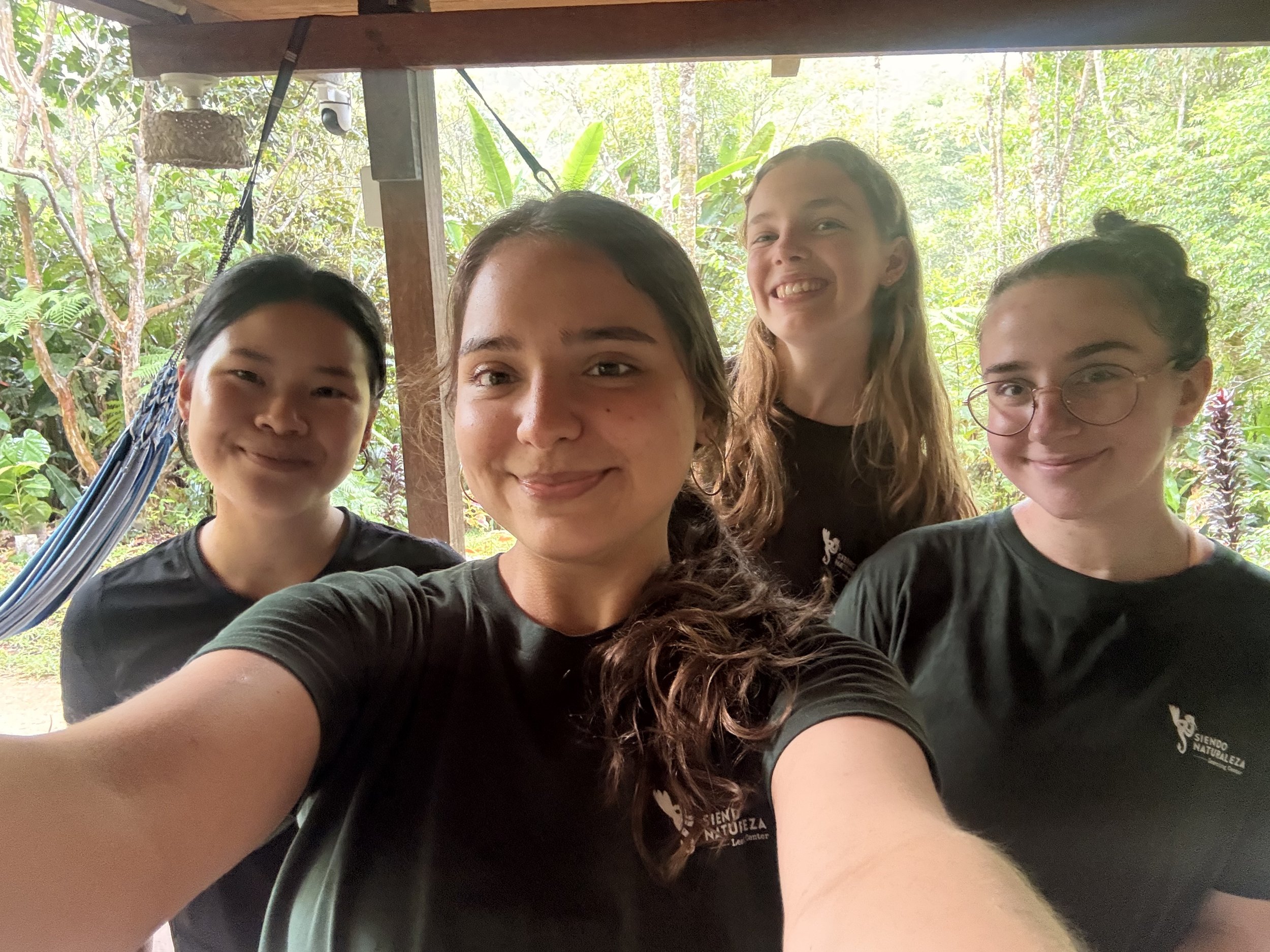
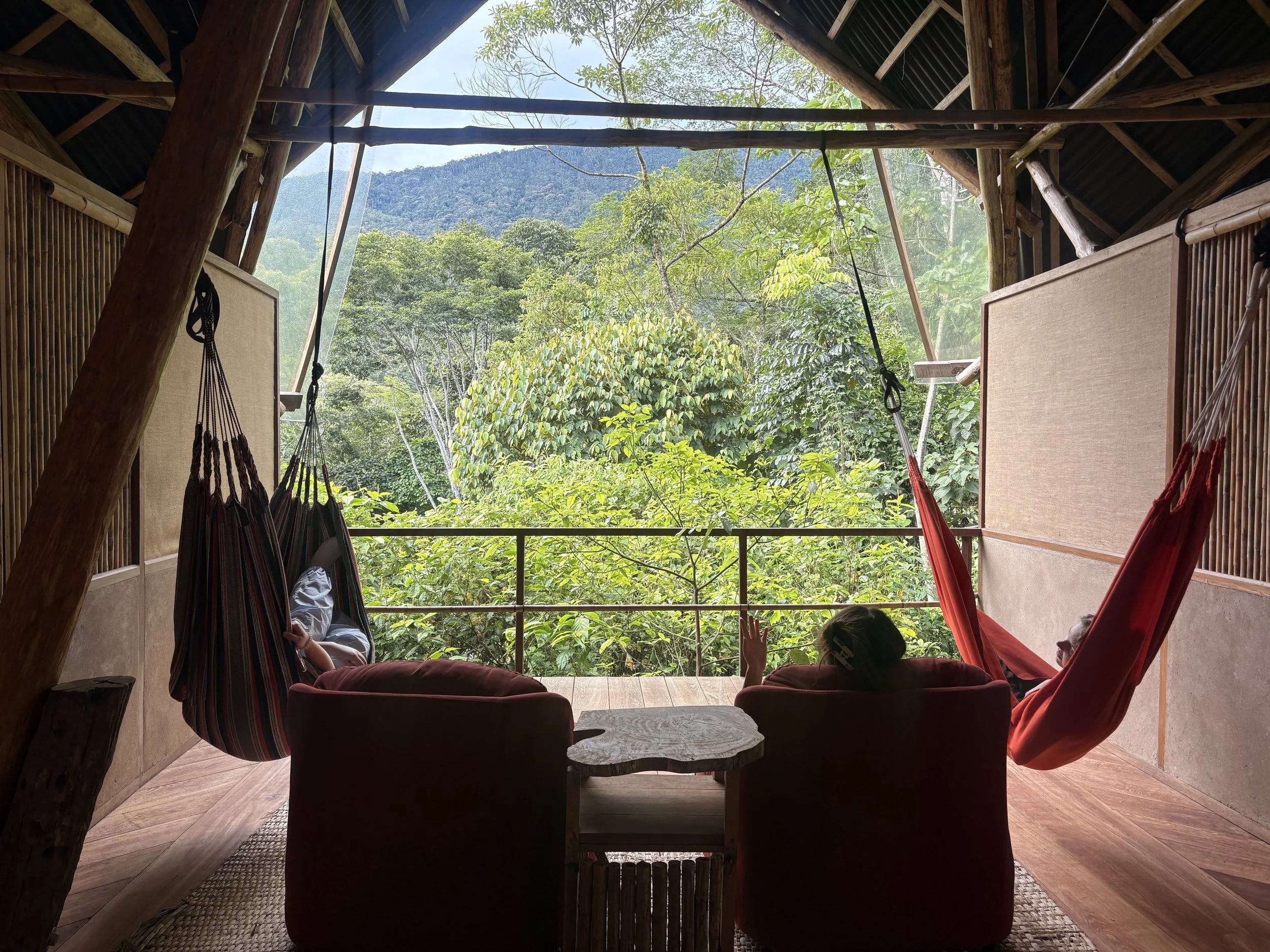
Hola! Qué tal? We are four McGill students from engineering and environmental backgrounds who came to Sacha Isla to learn from and contribute to the regenerative practices and way of life at Siendo Naturaleza. One month ago, each of us was getting ready to leave for the Peruvian Amazon while telling anyone and everyone about our summer plans. Being a city-dwelling cohort with no first-hand experience in the jungle, each of us held certain expectations. Some of us had romanticized notions of what our experience would look like, and others were excited but nervous about all of the unknowns. Regardless of our initial expectations and assumptions, we quickly learned that, while beautiful and exciting, living in the jungle and community is not as easy and simple as it sounds. An important lesson we’ve learned so far has been understanding that sustainability isn’t a project, but rather, a daily practice that defines our relationships with the natural environment, each other, and ourselves.
Every day here at Sacha Isla starts with a morning rota: soils or humanure with Marilu, kitchen with Lili, landscaping and woodworking with Persi, or cleaning with Meyli. At first, these seemed like mundane tasks that had little to do with our actual project, but we quickly realized how many important insights they provided us with. Each of the rotas form crucial components of the system that supports everyday life on the land, and this system is ultimately interconnected with our projects. At home, these components are mostly hidden. We buy most of our food without seeing where it comes from, flush toilets without thinking about where waste goes, and use hot showers without questioning the energy it takes to get hot water. At Sacha Isla, all of these processes are visible, and we are continuously engaging with them as we participate in the rotas. We are learning just how much time, energy, and human power it takes in order to have, and maintain, basic necessities. Our exposure to these processes has continued to shift our understanding of sustainability day by day.
Toilets, for example, were one of the biggest adjustments for us, and a key example of this shift in perception. At Sacha Isla, human waste isn’t sent away after every visit to the bathroom. Instead, it’s covered with sawdust, helping both to control smells and to start the decomposition process. This practice is part of a composting system where waste eventually returns to the land in various soil cycles through composting. From processing these buckets in our rotas, we have started to understand waste differently. It’s not something we simply discard, it’s a material that has a place in a larger ecological cycle. We went from “ew” to challenging our discomfort and changing our assumptions about cleanliness and comfort around natural cycles.
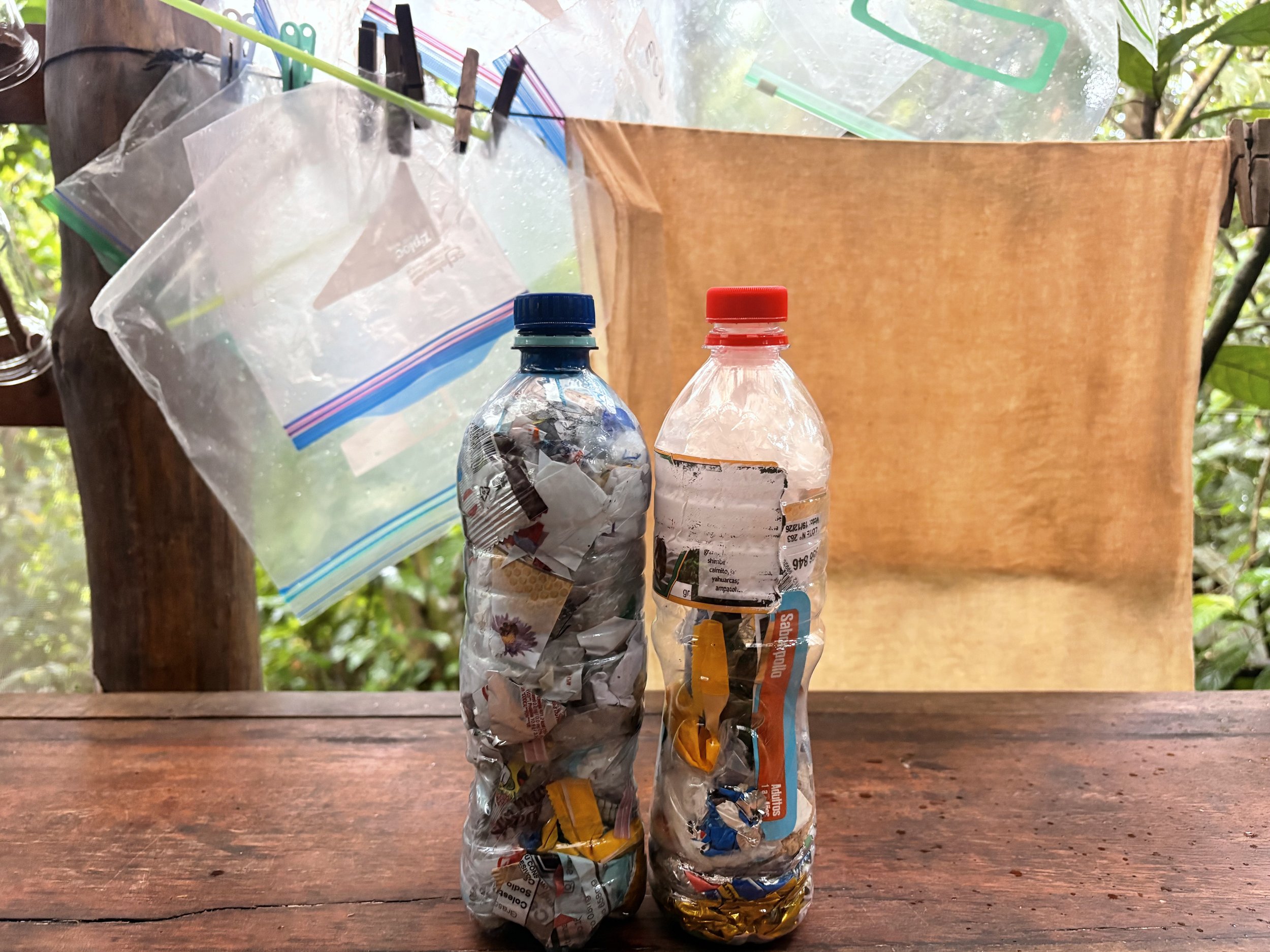
The kitchen is another example of where sustainability feels more tangible because everything is put to use. Cooking is not an isolated system. It is directly tied to harvesting, waste, and cleaning. In the mornings, this can look like collecting fresh fruit with Marilu for breakfast, cooking with Lili or later collecting food scraps to be fed back into compost systems. Nothing feels disposable either. For example, oats used to make pancakes are first blended into oat milk, and the leftover pulp is then used for baking. What comes wrapped in plastic is later ecobricked and used to build structures. Even the seeds of tiny peppers are kept, to be replanted back into the soil. This gives us a deeper appreciation for our meals and the care, labour and resources behind them. Shared meals means shared labour, and sustainability is a consistent collective effort in the kitchen.
Even something as simple as doing laundry must be adapted to the local environment. Seeing as laundry is completely dependent on the weather, clothes can be left to dry and still be damp after three days because of spontaneous rain. It has also made us think differently about the products we use, knowing that the soap and detergent runoff goes directly into our surrounding environment. Basic experiences like this have shown us just how deeply convenience is embedded into our everyday lives back home and how often we take it for granted.
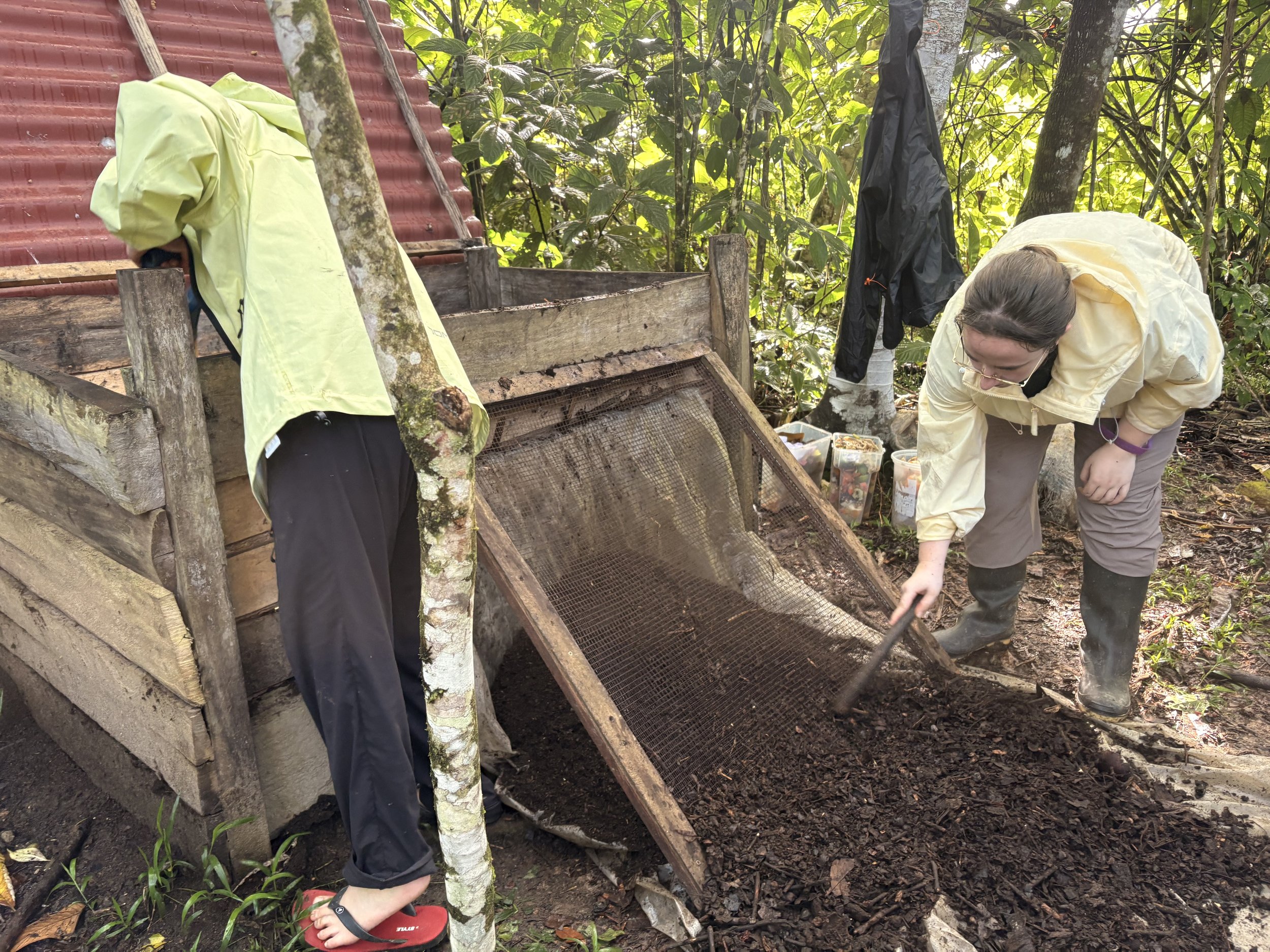
Our morning rotas have ultimately become more than just tasks. These daily routines have given us structure and direction to our project which revolves around integrating compost systems as well as biochar production. At first, we saw rotas as separate chores from our technical project. But, we quickly realized they are a continuation of what we consume, what we throw away and how we manage this waste. After sifting an old batch of Yana Allpa (black soil compost) with Marilu during a soil session, we became more aware of the intensity and effort currently required to operate the system. The work was both time-consuming and physically challenging which led us to focus on the reduction of human labour hours as a key goal in guiding our designs. For example, turning over the compost gave us the idea of prototyping a standing rotating compost aerator and sifter which we have named the Miza. Similarly, working in the kitchen made us realize the amount of food scraps we go through everyday and helped us understand the need for an intermediate step between food scrap processing and adding to the compost systems. This pushed us to think more about processes like vermiculture, precomposting and how waste can be better managed before entering a larger decomposition cycle.
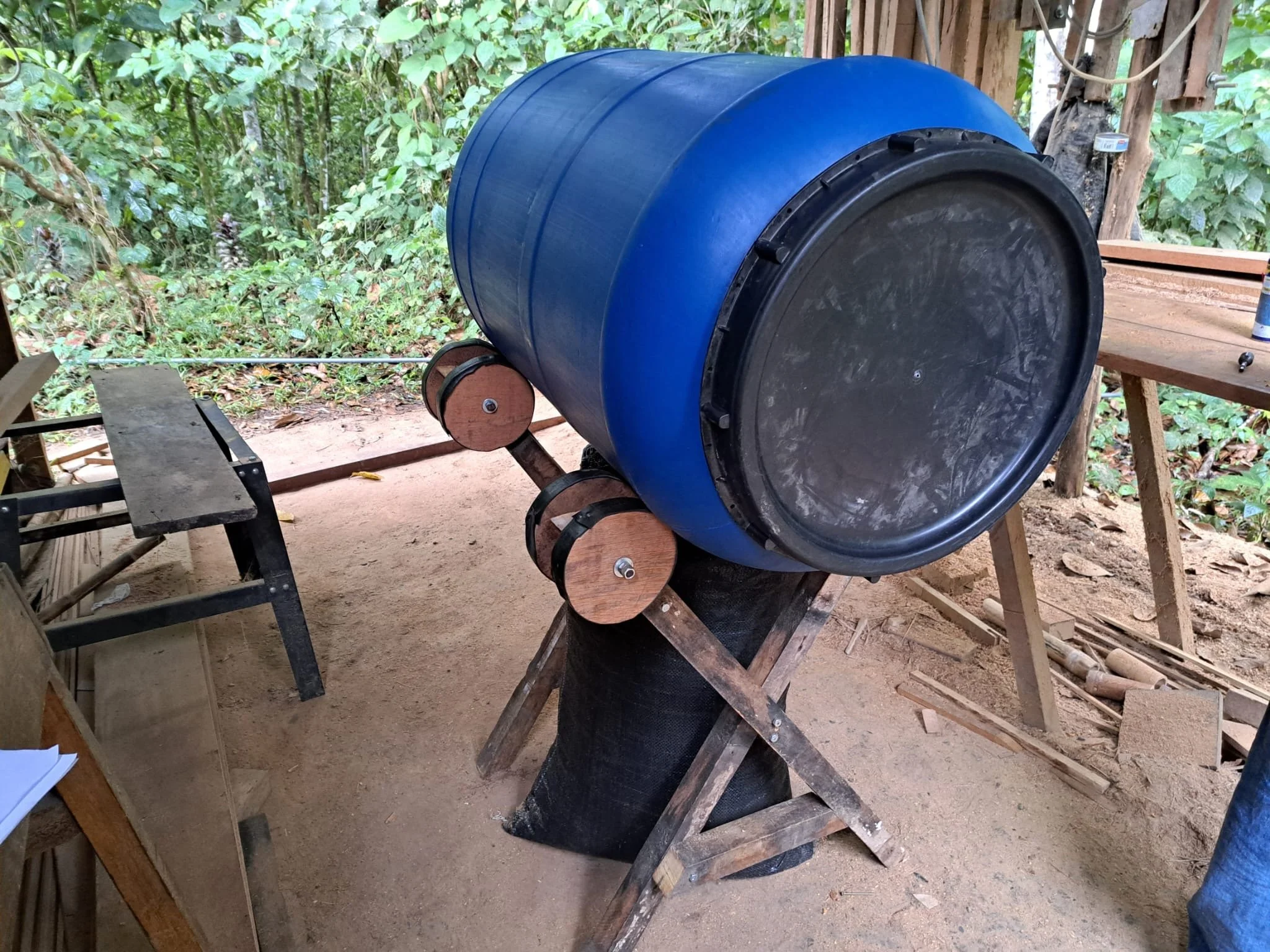
This experience has pushed us to think more about human centered designs, where we innovate based on participating and observing different systems. Rather than designing in isolation, we have learned to observe first, look for problems that arise and build from needs already present in these systems. This mindset has also pushed us to explore potential ways of integrating the resources already present on the land: caring for the worm systems as part of vermiculture, or even collecting urine as a way of charging biochar with nutrients before it returns to the soil and acts as a fertilizer. What stands out is that these are not one time actions but daily practices that require upkeep, care and everyone’s participation. In this way, our project becomes not only about creating new systems but also about supporting and strengthening the ones already in place.
So far, our biggest lesson has been understanding how interconnected each of the processes on the land are, and what that means for sustainability. Waste connects to compost, compost connects to food production, food connects to cooking, and cooking connects back to waste. Sustainability here is cyclical and very community dependent. Regenerative living not only depends on natural cycles, but also the human effort required to maintain the land. This must be rooted in consistency, effort, and trust.
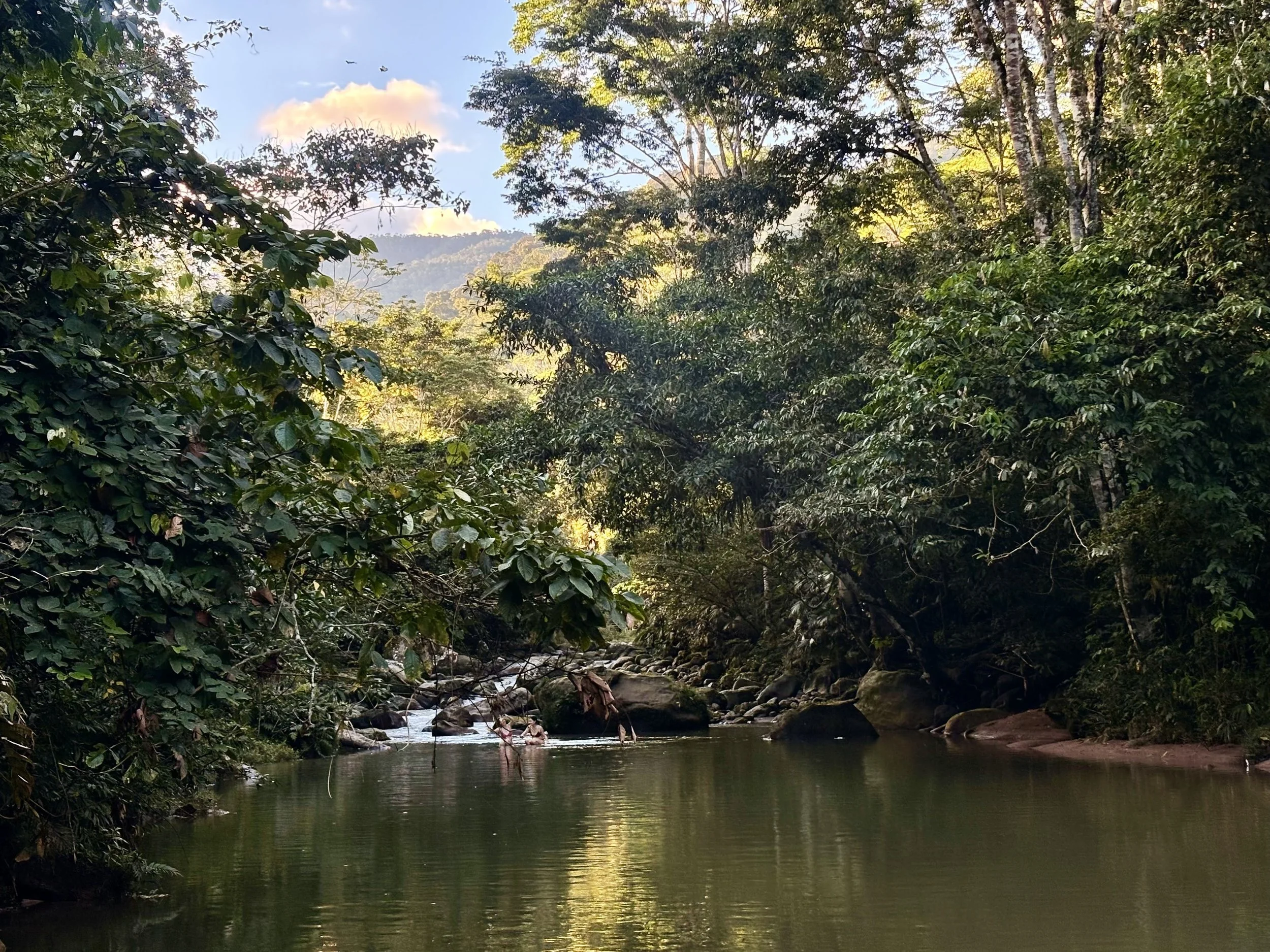
So, yes, living on the land was harder than we imagined, but also far more rewarding. While at first unfamiliar and uncomfortable, having cold showers, using dry toilets, and dealing with unpredictable laundry times has slowly helped us adapt to the rhythm of the jungle. Being on the land has slowed us down. It has made us more aware of all the different systems around us, the resources we use and the labour behind everyday necessities. Not only has it grounded us with the land but also with the people around us. We are still learning, observing, and are far from experts, but this experience has taught us that sustainability is not just something you turn on and off. It is built in the way you wake up, eat, clean, grow food, and manage waste every single day. To live regeneratively is to adapt, participate, cooperate, while trying to do this with a smile. We have grown to understand that we are not separate from the jungle, that we are instead a part of it.
XOXO, Agro-2026
Liza, Mina, Quinny & Chloe
Agroecology Team, RCI 2026