
Beyond Sustainability: From Environmentalist to Empathist
August 1st, 2025
By Lucas Dubelt
Project: Micro hydro
My name is Lucas Dubelt, I am an Environmental Engineering student entering my fourth and (hopefully) final year of my undergraduate studies. As the title of my degree may suggest, I am very invested in sustainability and what that means in our everyday lives. More specifically, I have a serious interest in energy and the solutions to our ever-growing energy demands. Growing up in rural Alberta, Canada, one of the largest oil and gas producers worldwide, I have been witness to how important it is for millions of people to maintain their livelihoods and keep the lights on in many parts of the world. I am lucky enough to have the chance to explore alternatives and solutions to these inherently unsustainable practices, with an understanding of how challenging it is to quickly change an industry that so many people rely on in so many ways. Though my degree explores a more modernized lens in engineering, I still struggle to think in a truly ecological way, which makes this project so impactful. It allows me to learn a new approach to design, which ultimately changes the way I view the material world around me.
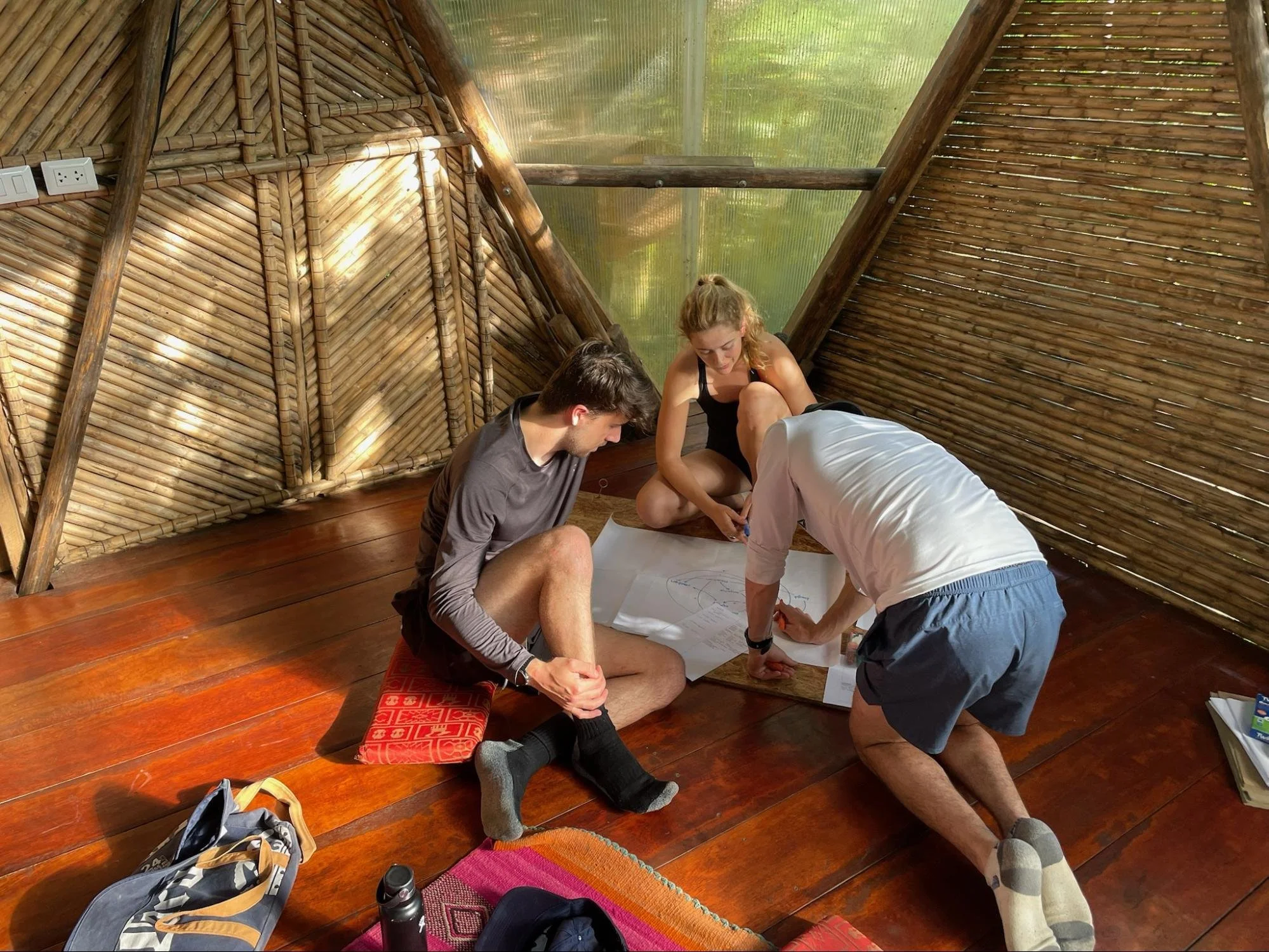
Objectively, micro hydro is a unique and efficient form of renewable energy that, when implemented properly and in the right context, offers a highly reliable source of power. This project stands apart from others you might come across on YouTube or your Facebook feed when you consider the deeper constraints we have chosen to meet. Our focus has been on finding a balanced solution to Siendo Naturaleza’s energy needs, one that can eventually replace their grid connection and support the organization’s growth as they expand their programs and deepen their impact. At the same time, the system must respect the years of regeneration that have already taken place and that will continue to evolve in the coming years.
It would be easy to approach this site analytically: measure the land, observe the reliable year-round water flow, and install a system with no restraint on materials or intervention. In all honesty, I came into this project somewhat narrow-minded, anchored in the concepts we developed during our two weeks of virtual research. The river at the base of the land, flowing through neighboring communities, holds enough energy to power much more than what the organization requires. Naturally, I thought it was the obvious choice. We could manage the flow, keep the intervention to a minimum, and still have more than enough power to replace both the grid and solar completely. It is close by, consistent, and powerful.
A question eventually surfaced, one that may seem simple, yet carries weight in this context: Is the challenge generating enough energy, or overconsumption of energy?
A common theme that has become more prominent in the broader conversation around resource management is that perhaps the focus should not be on producing more, but on rethinking how we use what we already have. It is a simple idea, maybe obvious, but one that rarely guides the way we approach modern design. Yet, this concept has deeply influenced our decisions in this project. It represents a shift in mindset, one that I have come to understand more thoroughly through my time with this organization.
Our scope was a bit unclear in the beginning of the internship, and I think it would be fair to say we didn't really know what our end goal would be. As we conclude the ninth week of our time with the organization, we feel more comfortable with the fact that we will not see the end goal come to fruition in our short time here. This project is much larger than our short weeks on the land, but our time here is very valuable for whoever gets to implement a solution informed by our work and our learnings.
For example, our experience with mapping led us to quickly eliminate some of the options we were considering in the early stages of the project, due to the unpredictability of certain areas or the complexity/cost of the design required to utilize certain areas. In doing this mapping, we were quickly able to determine which options would not be viable for a system, but more importantly, why they would not work.
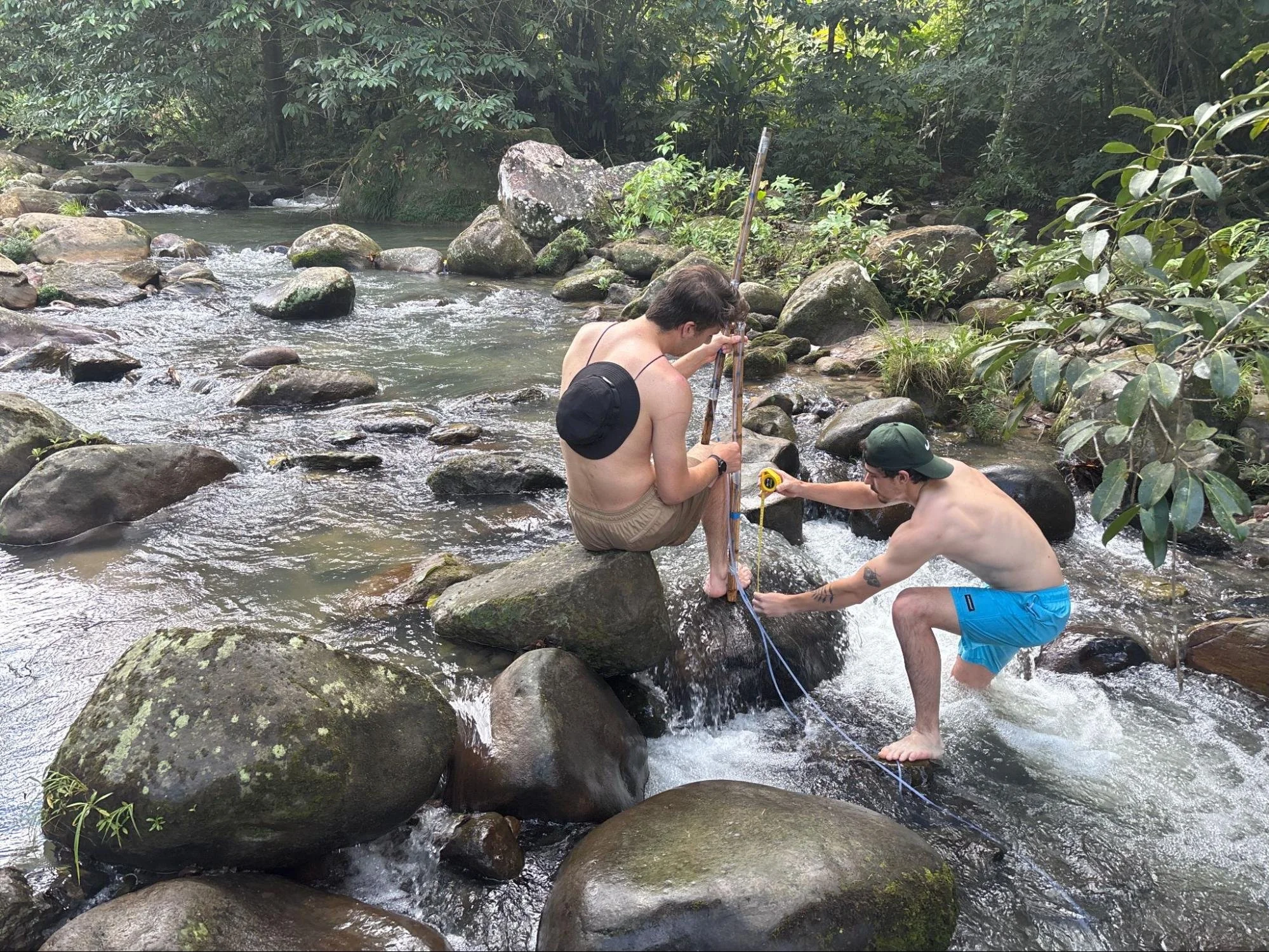
Another key part of our personal deliverables has been conducting small-scale tests to help modularize the system. These tests allowed us to better understand how each component functions on its own, giving us clearer insight into what contributes to a successful system when all elements are integrated.
Below is an example of one such test, where we examined the effects of an overflow runoff system on the riverbed, something that would have been necessary if we had opted for a standalone forebay. It is tests like these that inform our process and guide us in our search for a system that fits this context.
In school, I often struggle to see how the theoretical concepts we learn will have real-world applications. This project has been a great mix of building and autonomous experimenting, which is where I thrive, with a good amount of theoretical calculation. Having taken multiple courses that are very directly linked with the work we are doing here, it feels incredible to be able to use the skills I have gained through school in a way where the result is utility rather than a final grade. I’m extremely grateful to have had the chance to explore what it really means to design with more intention, with the guidance, support, and quiet encouragement of the team here. But more than anything, I’ve felt the gift of their patience, the kind that makes room for failure, reflection, and growth. That space to learn by doing (and sometimes undoing) is what regeneration means to me, and it’s what this organization represents in a deeper, more abstract way.
Lucas Dubelt
Intern, Regeneration Challenges Internship
Environmental engineering at the University of British Columbia
Loran Scholar